
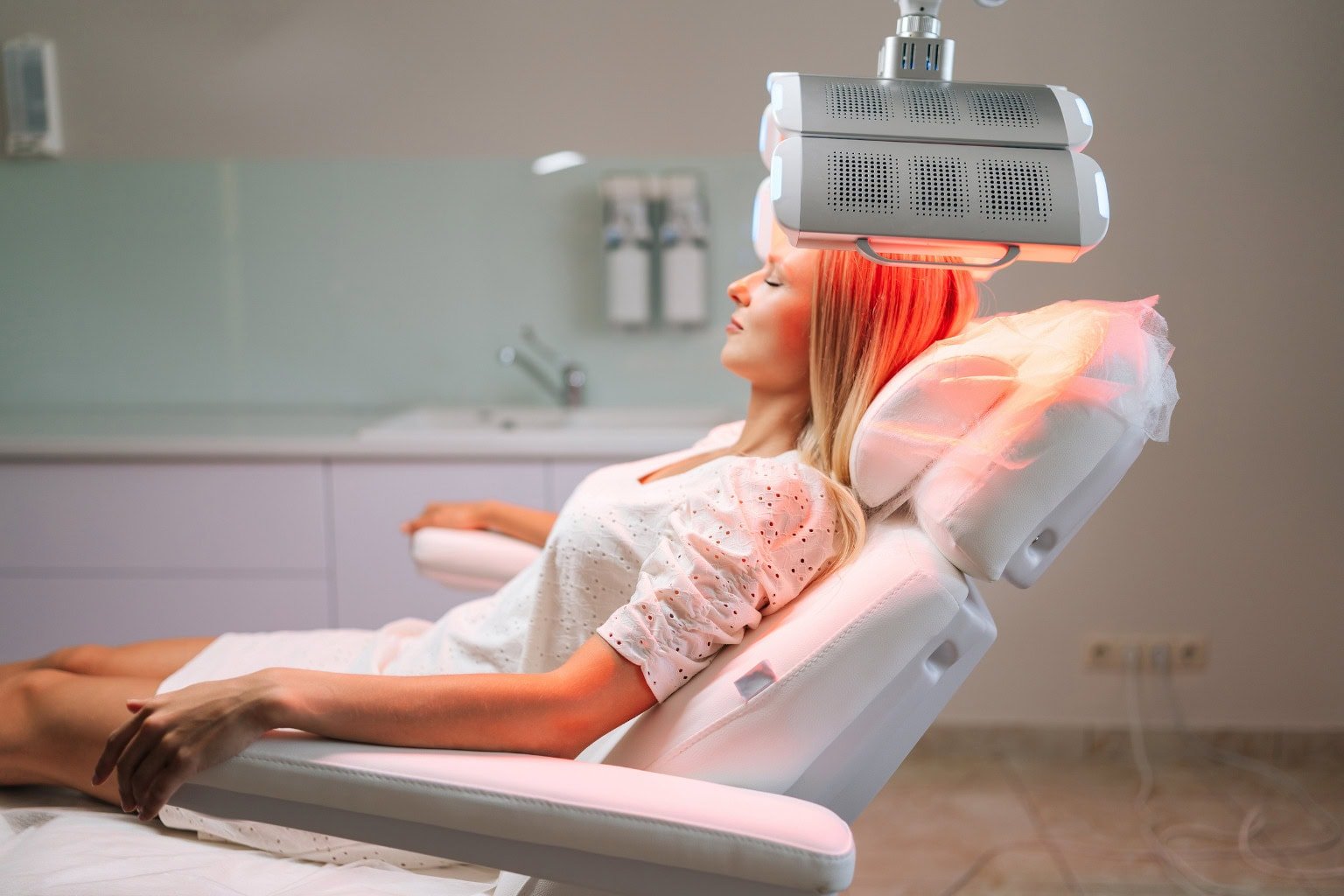
Red Light for Natural Healing and Hair Growth Support
Light has always played a central role in life and health, but recent advances have brought it to the center of modern wellness.
Low-Level Light Therapy (LLLT), also known as photobiomodulation, uses safe, targeted red and near-infrared light to help the body repair itself from the inside out. From stimulating hair follicles to easing inflammation, LLLT offers a gentle, effective approach to health that doesn’t rely on medications or invasive procedures.
At ROG Med Spa in Houston’s River Oaks Galleria neighborhood, LLLT is part of our integrative strategy for skin, scalp, and wellness support. It’s one of the most versatile, research-backed therapies available today, and it’s more accessible than most people realize.
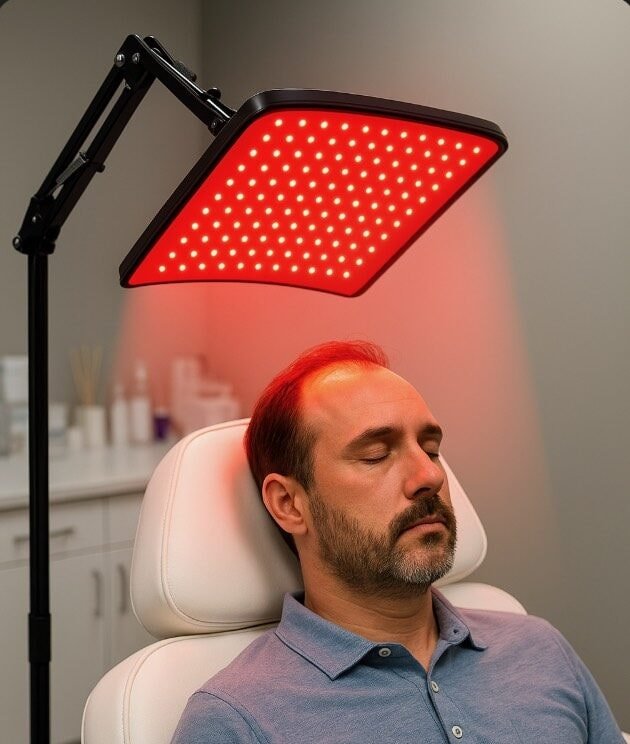
What is Low-Level Light Therapy (LLLT)?
Low-Level Light Therapy is a noninvasive treatment that delivers precise wavelengths of light into the skin and tissue. LLLT does not cut or damage the skin. Instead, it works at a biological level to improve how your cells function.
The process is simple: red and near-infrared light are absorbed by mitochondria, the structures inside your cells that produce energy. When this happens, it triggers an increase in ATP (adenosine triphosphate), which gives cells more energy to perform vital functions like repair, regeneration, and inflammation control.
This is why LLLT is used in areas such as:
- Hair restoration
- Skin rejuvenation
- Joint and muscle recovery
- Wound healing
- Chronic pain relief
Red vs. Near-Infrared Light: What’s the Difference?
Different wavelengths of light penetrate tissue at different depths. Red light, typically in the 630–670 nanometer (nm) range, targets the surface layers of skin and scalp. This makes it ideal for boosting blood flow, supporting collagen production, and stimulating hair follicles.
Near-infrared light, found in the 810–850 nm range, travels deeper into tissue. It supports joint recovery, muscle repair, and long-term inflammation control by enhancing mitochondrial performance below the skin.
| Aspect | Red Light (630–660 nm) | Near-Infrared Light (810–850 nm) |
|---|---|---|
| Penetration Depth | Shallow (epidermis and dermis layers) | Deep (subcutaneous tissues and muscles) |
| Best For | Skin surface, scalp, collagen production | Joints, deep tissue, inflammation, follicle health |
| Primary Function | Enhances ATP production, boosts circulation | Reduces inflammation, supports deeper healing |
| Common Uses | Hair regrowth, skin rejuvenation, scar recovery | Pain relief, tissue repair, muscle recovery |
| Typical Application | Red light masks, caps, panels | Full-body panels, joint therapy, scalp beds |
At ROG Med Spa, we use a professional-grade device that combines both 660 nm red light and 850 nm near-infrared light for full-spectrum results.
Why People Use LLLT for Hair Growth
Hair thinning and loss can affect anyone, and the causes differ. Hormones, stress, genetics, and inflammation all play a role. LLLT targets these underlying issues by improving circulation in the scalp and energizing hair follicles at the root level.
Clinical studies have found that red light in the 630–670 nm range can reactivate dormant follicles and increase hair density. Near-infrared wavelengths enhance this effect by reaching deeper tissues and reducing inflammation that can hinder growth.
Beyond Hair: LLLT for Skin, Pain, and Recovery
LLLT is often used to enhance skin tone, reduce scarring, and speed recovery after cosmetic procedures. It works by stimulating collagen and elastin, which are essential proteins for smooth, youthful skin. It’s also gentle enough for post-surgical use, helping to minimize inflammation and promote healing.
Athletes and individuals with chronic joint pain also benefit. Near-infrared light can help reduce soreness and support soft tissue repair after physical strain. Unlike medications that mask symptoms, LLLT supports natural recovery by giving cells more energy to function properly.
Early research is also exploring the use of LLLT in age-related macular degeneration (AMD) and other eye conditions. While this use is still under study, initial findings are promising.
How to Start LLLT Treatment
- Schedule a consultation: Meet with one of our specialists to evaluate whether LLLT is right for your needs.
- Choose your treatment area: We’ll focus on your scalp, face, joints, or body, wherever support is needed.
- Begin consistent sessions: We recommend a treatment schedule tailored to your goals, usually 2–3 times a week.
- Track your progress: We’ll help you document changes and adjust your plan as needed to get the best outcome.
- Maintain results: Many clients continue with occasional sessions to preserve improvements.
How LLLT Works at ROG Med Spa
Every treatment begins with a consultation. We’ll assess your goals, whether that’s thicker hair, clearer skin, or relief from inflammation, and create a custom plan using the appropriate combination of red and near-infrared light.
We use panel-based and cap-based devices depending on your treatment area. Sessions are typically short, and there’s no pain, downtime, or recovery period required. Most clients find it relaxing—similar to a warm, light therapy session.
You’ll start seeing visible results in 4 to 8 weeks, with the best results developing over time through regular sessions.
If you’re curious about how LLLT could fit into your wellness or hair restoration journey, we invite you to schedule a consultation. We’ll walk you through every step and make sure it’s right for you.
Visit ROG Med Spa in Houston’s River Oaks Galleria and discover how our red light treatments can support your natural health, beauty, and healing. Call us or schedule online today.